
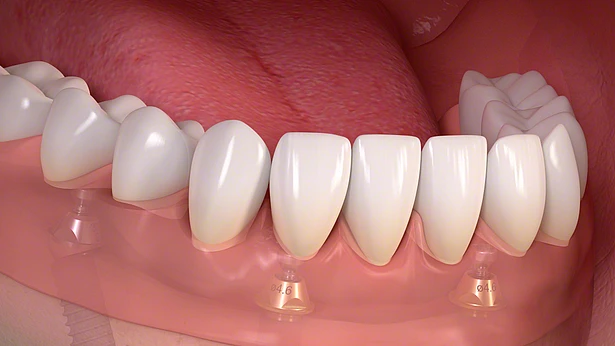
Dental bridge

Dental Bridge – The Fixed Solution for Missing Teeth
A dental bridge is a high-quality, fixed dental prosthesis that replaces one or more missing teeth, restoring a natural appearance, stability, and chewing comfort. It is anchored to the adjacent teeth or implants and permanently closes the resulting gap—aesthetically, functionally, and safely. A bridge can help prevent future tooth shifting, improper bite alignment, or temporomandibular joint problems.

What is a dental bridge?

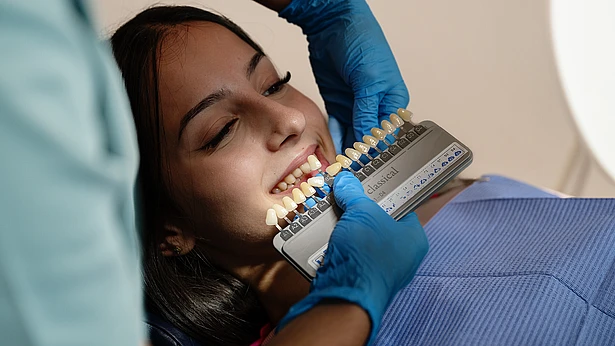
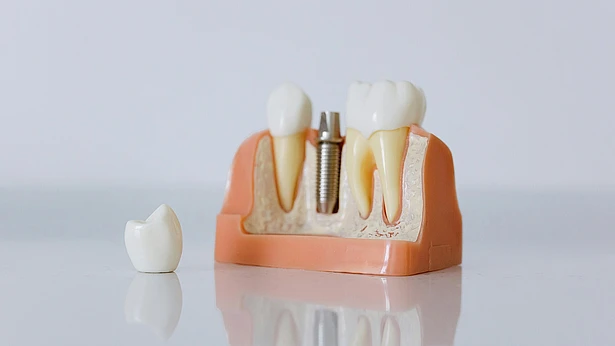
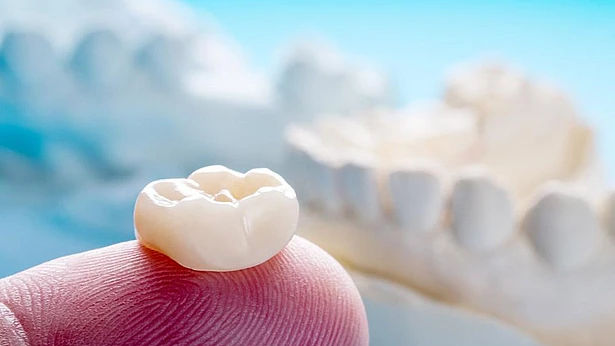
A dental bridge (often simply called a “bridge”) permanently replaces one or more missing teeth. The bridge consists of one or more artificial teeth (the pontic) as well as crowns attached to the left and right sides of the pontic, which are secured to the adjacent teeth or implants. Modern bridges are aesthetically pleasing, stable, and can be made to match the color of your natural teeth, allowing them to blend seamlessly into your smile. They enable you to chew, speak, and smile with confidence—without the need for removable dentures.

Immediate restoration for dental bridges

In certain cases, it is possible to immediately fill the gap left by a missing tooth with a temporary or fixed bridge. This immediate restoration allows patients to leave the office without a visible gap in their teeth and to resume normal chewing and speaking right away. Benefits: a quick, aesthetic solution, protection of adjacent teeth, and minimization of tooth movement. The final bridge is precisely fitted after the healing phase.

Advantages of a dental bridge

The following advantages are highlighted when deciding on a dental bridge:

  • Natural appearance & high comfort
  • Immediately functional, stable solution
  • Invisible aesthetics thanks to modern ceramics
  • No need to remove
  • Improved speech and chewing
  • Proven, safe, and time-tested
  • Shorter treatment time than with implants

Treatment procedure

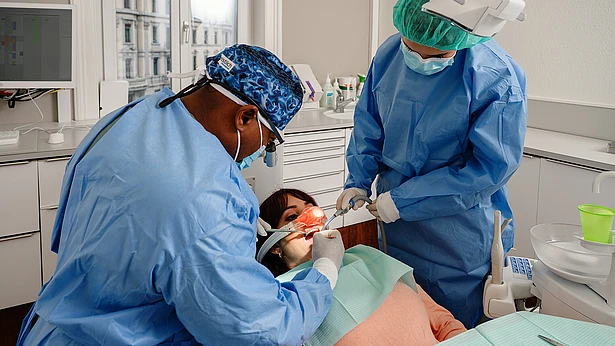
Diagnosis & Planning

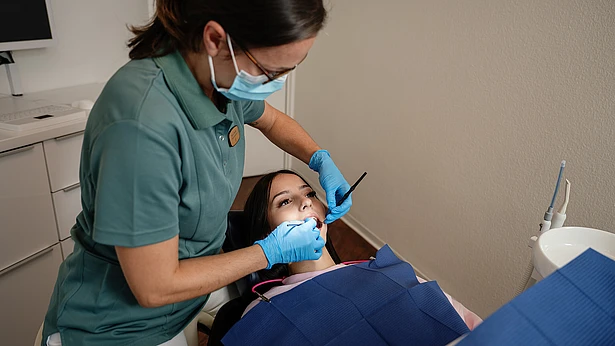
  • Examination, X-ray diagnostics, and discussion of the appropriate type of bridge
  • Decision on material (e.g., ceramic, metal-ceramic, zirconia)

Preparation of the abutment teeth

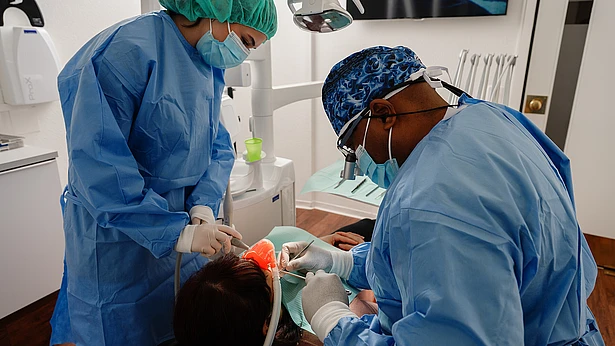
  • The adjacent teeth are carefully prepared to accommodate the bridge crowns.
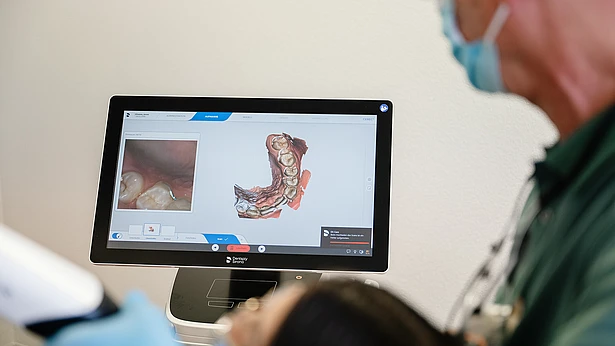
  • Impression or digital scan for the dental laboratory

Temporary restoration

  • Protection of the prepared teeth and aesthetics until the final bridge is completed

Fabrication in the dental laboratory

  • Precise fabrication according to shape, color, and occlusion

Placement & Check

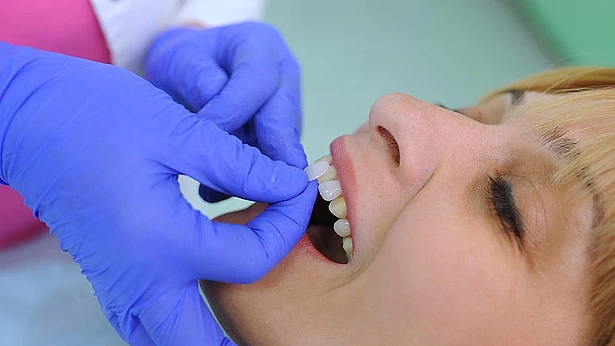
  • Fitting, cementation, and functional check
  • Explanation of optimal care and follow-up appointments

Care instructions

  • A dental bridge requires just as much thorough daily care as natural teeth
  • The use of dental floss or special interdental brushes / Superfloss is highly recommended.
  • Regular professional dental cleanings help ensure longevity (2–4 times a year)
  • Durability can depend heavily on oral hygiene, diet, and parafunctional habits (e.g., teeth grinding).

For a feeling like natural teeth - without any foreign body sensation.

Book an appointment now