
Root canal treatment

Root canal treatment (endodontics) is a tooth-saving procedure performed when the tooth’s nerve is inflamed or infected. By cleaning, disinfecting, and sealing the root canals, the tooth can be preserved long-term—a sustainable alternative to tooth extraction.

What is root canal treatment (endodontics)?

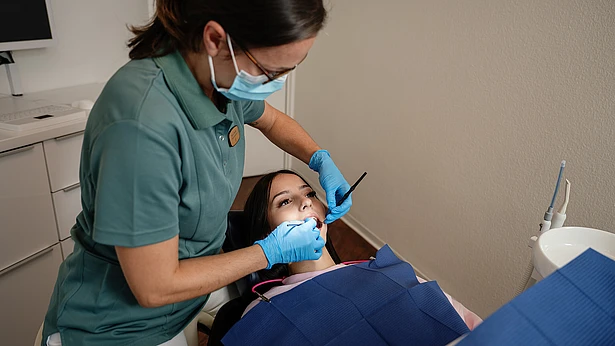
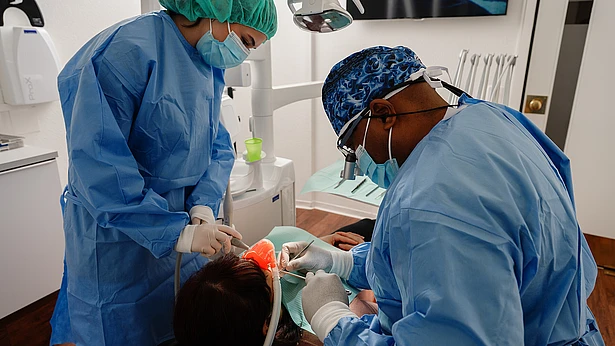
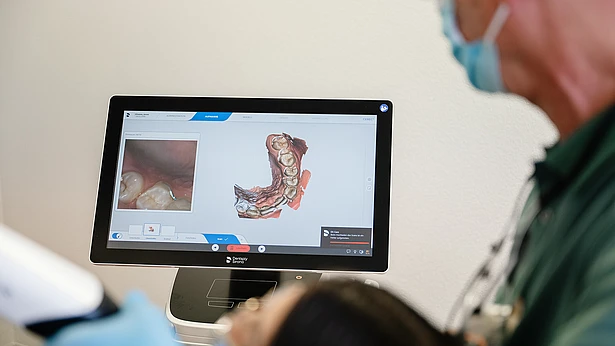
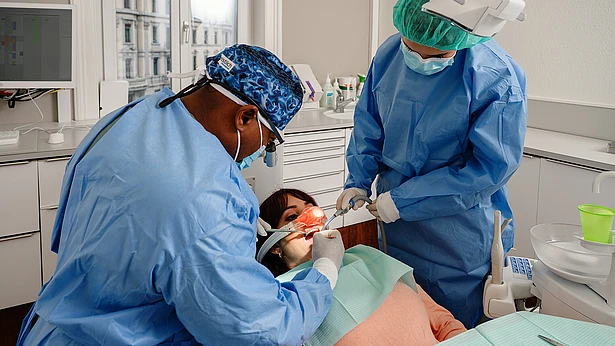
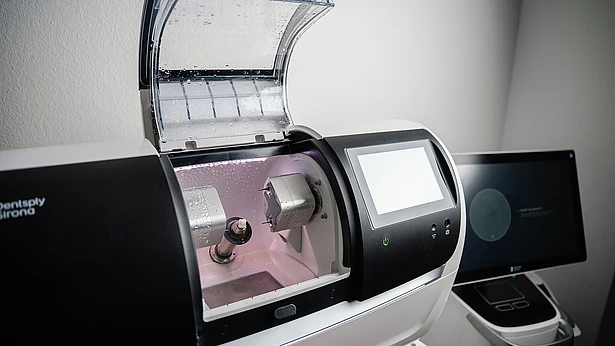
During a root canal treatment, the diseased or dead tissue inside the tooth (pulp) is removed. The root canals are then thoroughly cleaned, disinfected, enlarged, and sealed to prevent bacterial entry. This prevents the spread of bacteria, relieves pain, and allows the natural tooth to be preserved. Modern endodontics utilizes digital diagnostics, micro-fine instruments, machine preparation, ultrasonic activation, and bioceramic materials to achieve the highest success rates.

Typical causes:

  • Deep caries
  • Crack or fracture in the tooth
  • Traumatic injuries
  • Leaky fillings or crowns
  • Repeated treatments on the same tooth

Advantages of root canal treatment

  • Preserving the natural tooth instead of extracting it
  • Pain relief and infection control
  • Natural chewing function is preserved
  • Aesthetically unobtrusive, especially with a subsequent crown
  • Prevents bone loss that can occur after tooth extraction
  • Long-lasting solution with proper follow-up care


Comparison: Root canal treatment vs. tooth extraction vs. implant

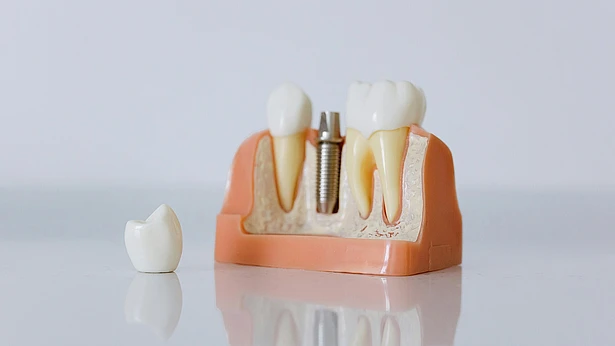
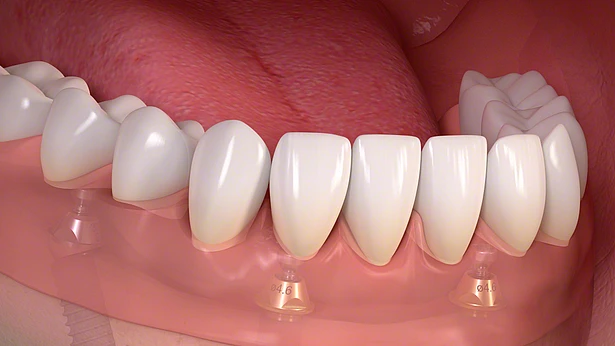
If a tooth is severely damaged, inflamed, or non-vital, there are generally three treatment options to choose from: saving the tooth through root canal therapy, tooth extraction, or replacing the tooth with an implant. 

According to modern dental standards, preserving the natural tooth is always the top priority. Only when a tooth cannot be stabilized or maintained in a healthy state despite endodontic treatment should extraction and an implant be considered. Implants are currently the best form of fixed dental prosthesis, but they never fully replace the biological function of a natural tooth.

The best treatment depends on the individual diagnosis, aesthetic goals, bone and tooth structure, as well as financial and health considerations.
 

Root canal treatment procedure

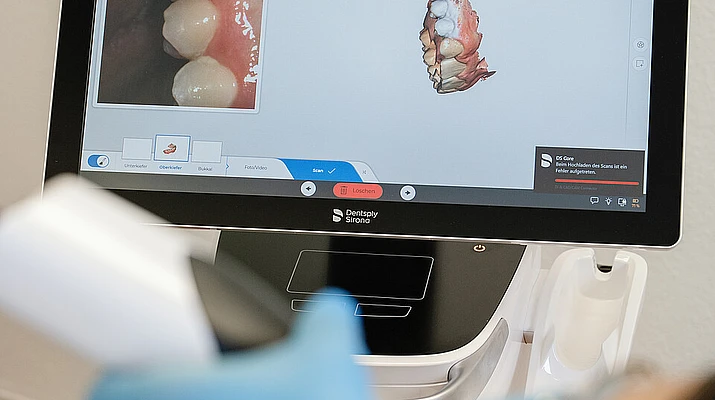
Diagnosis & X-ray/3D Analysis

  • Localization of inflammation and shape of the root canals

Local Anesthesia & Access

  • Painless opening of the tooth

Cleaning & Disinfection

  • Removal of the inflamed nerve tissue
  • Mechanical and chemical canal cleaning
  • Use of loupes or a microscope for precision

Root canal filling & sealing

  • Dense 3D filling of the canals with biocompatible material
  • Stabilization of the tooth

Permanent restoration

Important care instructions

  • After treatment, the tooth may be temporarily sensitive to pressure.
  • A stable, long-term restoration (onlay, crown) is recommended to prevent fractures.
  • Regular check-ups ensure the long-term success of the treatment.
  • In cases of complex anatomy, specialized endodontic treatment may be advisable.
  • Timely treatment prevents abscesses and jawbone inflammation.

Preserve your natural tooth with professional root canal treatment.

Book an appointment now