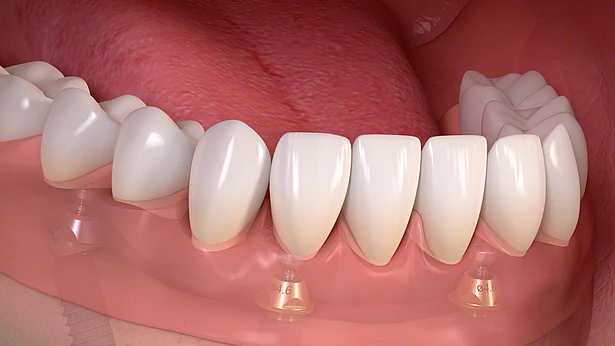
All-on-4
Permanent teeth in just one day—safe, modern, and aesthetically pleasing.
Learn more
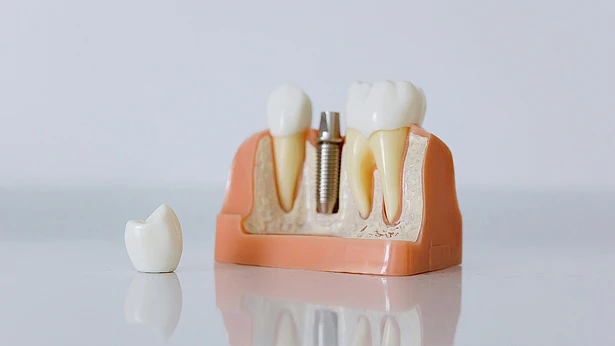
A missing tooth can interfere with chewing, speaking, and smiling. Dental implants replace the natural tooth root and provide the foundation for secure, custom-designed dental restorations.
At Zahnkronenhalle Zurich, we combine personalized consultation, digital diagnostics, and expertise in oral surgery. Together, we’ll determine whether a dental implant is suitable for your situation and which solution best meets your needs.
If you want
to replace a missing tooth, dental implants are an option when a single tooth is missing, multiple teeth need to be replaced, or a removable denture does not provide sufficient support. Many patients want a solution that remains stable while chewing and speaking. An implant can also prevent healthy adjacent teeth from having to be ground down to support a bridge.
Whether implant treatment is possible depends, among other things, on the following factors:
A thorough examination is the foundation for making an informed decision.
Customized Dental Restorations for Various Situations
Implantology offers a variety of solutions. The appropriate treatment depends on the number of missing teeth, the condition of the bone, and your functional and aesthetic goals.
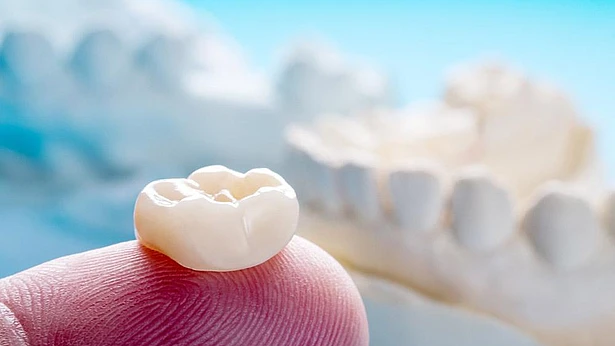
If a single tooth is missing, an implant can replace the natural tooth root. A custom-made dental crown is then attached to it. The adjacent teeth generally remain unaffected.
If multiple teeth are missing, two or more implants can serve as abutments for a fixed bridge. This allows a larger gap to be restored with fewer implants than the number of missing teeth.
In cases of a severely shortened or edentulous arch, implants can provide additional support for a denture. This can make chewing, speaking, and daily activities easier.
All-on-4 is a treatment for edentulous jaws or rows of teeth that can no longer be adequately preserved. A fixed restoration is supported by four strategically placed implants. Learn more on the “All-on-4” page.
Greater Stability in Everyday Life
A dental implant can provide a fixed restoration. Many patients appreciate that their dental prosthesis feels stable when chewing and speaking.
Depending on the diagnosis, dental implants can offer the following advantages:
At your first appointment, we’ll discuss your symptoms, preferences, and past experiences. We’ll then examine your teeth, gums, and jaw. If necessary, we’ll check for any existing inflammation or treat it before the implant procedure.
Important questions include:
Depending on the specific case, we use clinical examinations, 2D X-rays, or digital volume tomography for planning. The 3D image shows the spatial relationships between the jawbone, teeth, and important anatomical structures.
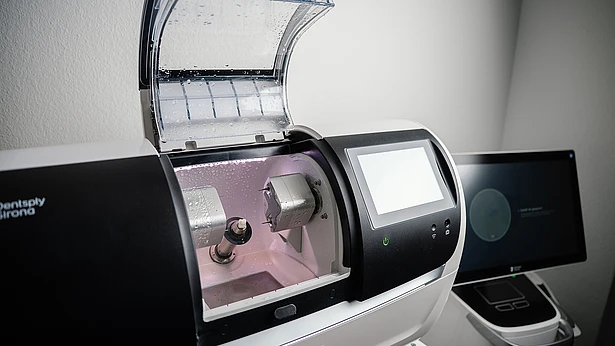
Digital planning helps tailor the procedure to your anatomy. It aids in assessing bone availability, implant placement, and the subsequent dental restoration.
Before the procedure, we work with you to determine the appropriate implant treatment plan. This includes selecting the implant system, determining the implant’s position, and planning the future crown, bridge, or denture.
A temporary dental restoration can also be planned. This allows us to bridge the transitional period both functionally and aesthetically.
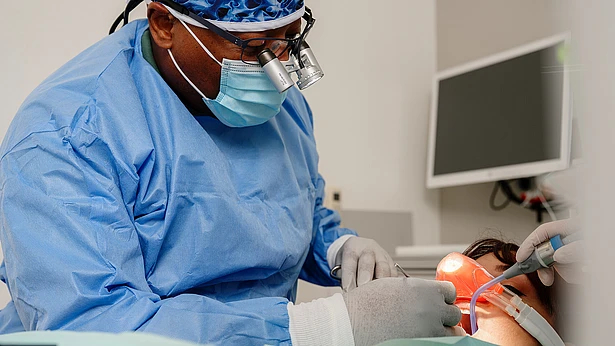
The implant is placed into the jawbone under local anesthesia. Depending on the procedure and the patient’s individual situation, the use of sedation may also be considered.
After implantation, the wound is dressed. The implant’s position and the planned post-operative care are checked once again.
During the healing phase, the implant fuses with the jawbone. This biological bond is known as osseointegration. The duration depends on the implant, the bone, and the individual’s healing process.
After healing, an abutment is attached to the implant. The final dental prosthesis is then placed and checked for function, fit, and aesthetics.
After the procedure, you will receive specific instructions on cleaning and care. Regular checkups will determine whether the implant, gums, and dental prosthesis remain stable.
Depending on your situation, implant care may include:
If a tooth cannot be saved, an immediate implant is placed right after the tooth is extracted. Whether this procedure is possible depends, among other things, on the level of inflammation, bone quality, the position of the tooth, and the planned restoration.
With immediate restoration, a temporary prosthesis is also placed. In suitable cases, this helps avoid a visible gap. At this stage, the implant has not yet fully integrated. The timing of the final restoration therefore depends on the individual situation.
An immediate implant is not suitable for every case. A thorough examination determines whether the benefits of this procedure meet the medical criteria.
Would you like to chew confidently again and laugh without a care in the world? Give us a call or book a consultation appointment online. We’ll take the time to answer your questions.
A missing tooth can cause the jawbone to resorb over time. If there is insufficient bone for a dental implant, bone grafting may be necessary. In bone grafting, additional bone material is placed in the affected area. The goal is to create a stable foundation for the implant. Depending on the initial condition, bone grafting is performed either before implant placement or in conjunction with the placement of the implant.
Whether bone grafting is necessary can be determined through an examination and X-ray diagnostics. A 3D image can aid in the spatial assessment of the available bone.
Titanium is biocompatible, has been tried and tested over many years, and is used in many implant procedures. It is suitable for a wide range of clinical situations.
Zirconia ceramic implants can be a metal-free option. They are often considered, particularly when aesthetic or individual tolerance issues are a factor.
There is no single implant material that is equally suitable for all patients. After the examination, we will explain the differences to you and take your specific situation into account when making a decision.
Even if you have a fear or phobia of the dentist, implant treatment can still be planned. We’ll discuss each step in advance and break the treatment down into manageable appointments.
Depending on your situation, we can discuss options such as local anesthesia, sedation, or nitrous oxide. The most appropriate option depends on the treatment and your overall health.

Are you afraid or do you feel uncomfortable at the dentist? Give us a call or book an appointment online. We take your fear of the dentist seriously and will guide you calmly through the next steps.
The long-term stability of a dental implant depends on several factors. Careful planning, healthy gums, good oral hygiene, and regular checkups are crucial.
The following are particularly important:
An implant is not a maintenance-free dental restoration. Personal care and professional follow-up care contribute significantly to its long-term stability.
Zahnkronenhalle combines expertise in implantology with experience in oral surgery. Dr. stom. Gonzalo Olivares Carbonell is a specialist in oral surgery. The team guides you through every step of the process, from diagnosis and implantation to the final restoration and follow-up care.
The dental practice is located at Rämistrasse 2 in the Bellevue neighborhood of Zurich. Digital diagnostics and 3D imaging can assist with treatment planning when the clinical situation requires it.

Schedule a consultation at Zahnkronenhalle Zurich. We'll assess your situation, explain the possible solutions, and discuss the next best step.
The cost of a dental implant in Zurich can only be accurately estimated after an examination. A personalized cost estimate will outline the services and type of dental prosthesis recommended for your specific case.
The following components may be included in the calculation:
Basic health insurance in Switzerland generally does not cover dental implants. Cost-sharing may be possible under certain medical circumstances or through supplemental insurance. Please clarify your insurance coverage directly with your health insurance provider before treatment.
To get a personalized cost estimate, you can schedule a consultation.
A dental implant is placed under local anesthesia. As a result, patients generally do not feel any pain during the procedure; afterward, however, they may experience a feeling of pressure, swelling, or sensitivity.
The severity of these symptoms depends on the procedure and the individual’s healing process. We’ll provide you with information on:
If you experience severe, worsening, or unusually prolonged symptoms, please contact us.
Implant treatment can involve just a few appointments or span several months. The duration depends on the bone, the condition of the gums, and the planned restoration.
More time may be required if:
After the examination, the treatment team will explain the individual appointments and the expected course of treatment. It would not be medically reliable to give a general estimate of the treatment duration.
With proper care and regular follow-up visits, a dental implant can remain stable over the long term. However, a specific lifespan cannot be guaranteed because it depends on a combination of biological and personal factors.
The following are particularly important:
The long-term prognosis is assessed on an individual basis during the planning phase. It does not depend solely on the implant itself.
A dental implant may still be possible even with limited bone volume. An examination using X-rays and, if necessary, 3D diagnostics will determine whether bone grafting is required.
This assessment evaluates, among other things, bone height, bone thickness, and the location of important anatomical structures. Depending on the initial condition, bone grafting can be performed:
The appropriate approach depends on the planned crown, bridge, or denture. A personal consultation in Zurich will clarify the next steps.
Dental implants are not automatically ruled out for smokers. However, smoking can impair wound healing and increase the risk of inflammation as well as subsequent implant loss.
It is important to openly discuss nicotine use when planning treatment. Taking a break from smoking before and after the procedure can support the healing process. Whether implant treatment is advisable is determined in consultation with the treating dentist, taking into account the patient’s overall oral and general health.
Dental implants can be placed in patients with diabetes if the condition is well-controlled. Chronically elevated blood sugar levels can delay wound healing and increase the risk of infection.
Before treatment, the team considers, among other things:
Close collaboration between the dentist and the treating physician can be beneficial in complex health situations. The key factor is the individual medical assessment.
A dental implant replaces the missing tooth root and supports a crown or a bridge. A traditional dental bridge is attached to adjacent teeth, which must be prepared for this purpose.
The main differences:
Which solution is more suitable depends on the gap, the adjacent teeth, the bone, the gums, and your goals. This decision should be made following an examination and a joint consultation.
A dental implant can be placed if the oral condition suggests that stable healing is likely. To determine this, factors such as the gums, jawbone, and overall health must be taken into account.
Depending on the findings, implantation may be an option:
An immediate implant is therefore an option for select situations, not a standard procedure for every missing tooth. The decision is made following a clinical examination and diagnostic imaging.
A temporary dental prosthesis can be placed during the healing process. It can close a visible gap and help with chewing in everyday life.
The appropriate temporary solution depends on the procedure and the implant’s load-bearing capacity. Depending on the situation, the following options are available:
The permanent implant will not support the final dental restoration until the healing process has progressed sufficiently. The treating dental practice will determine how much stress the temporary solution can withstand.
If an implant does not integrate sufficiently with the jawbone, it is generally not subjected to long-term stress. The next steps depend on the cause and the local situation.
Possible steps include:
Early follow-up is important if pain, swelling, loosening, or other noticeable symptoms occur. The treating specialist will determine which course of action is medically appropriate.
Age alone is not a reason to rule out dental implants. More important factors include overall health, oral health, medications, and the ability to perform daily oral care.
The assessment takes into account, among other things:
Careful planning is especially important when multiple medical conditions or medications are involved. Implant-supported dentures can also be a suitable solution for older adults.
In many cases, basic health insurance does not cover the cost of dental implants in Switzerland. Cost-sharing may be an option in certain exceptional medical cases or through supplemental insurance.
Before treatment, you should clarify:
The practice can provide an estimate of the expected treatment costs in a personalized cost breakdown. You will receive definitive information regarding insurance coverage directly from your health insurance provider.